Pattern Worksheets for Class 1 and UKG (Free PDF)
Once a child can finish an easy star, heart, star, heart pattern, they are ready for longer ones. These 8 free worksheets use three different shapes and longer repeats like ABC, AABB and ABBC, the kind of patterns class 1 maths books start with. Your child has to find where the pattern starts again, which takes real concentration.
- Best for
- UKG and class 1 (age 5 to 7)
- Skill
- Finding the rule in longer, three-part patterns
- What you get
- 8 pages, 1 PDF, A4, black and white
See every page
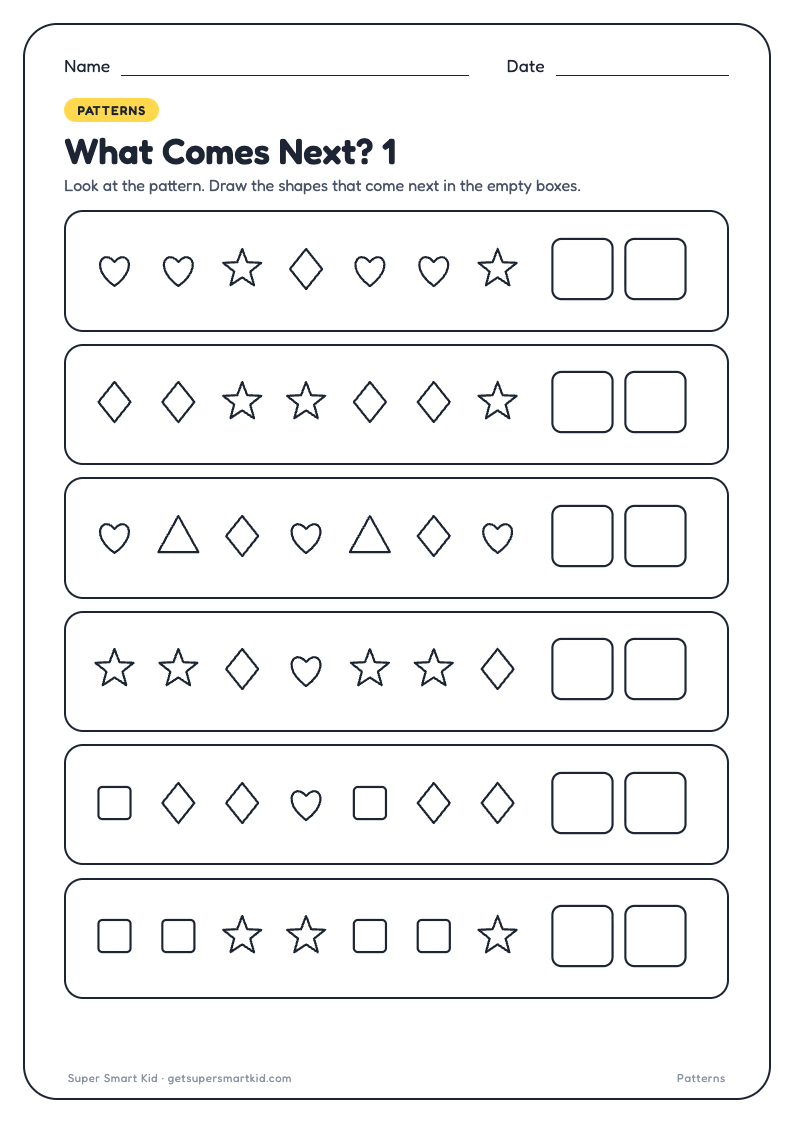
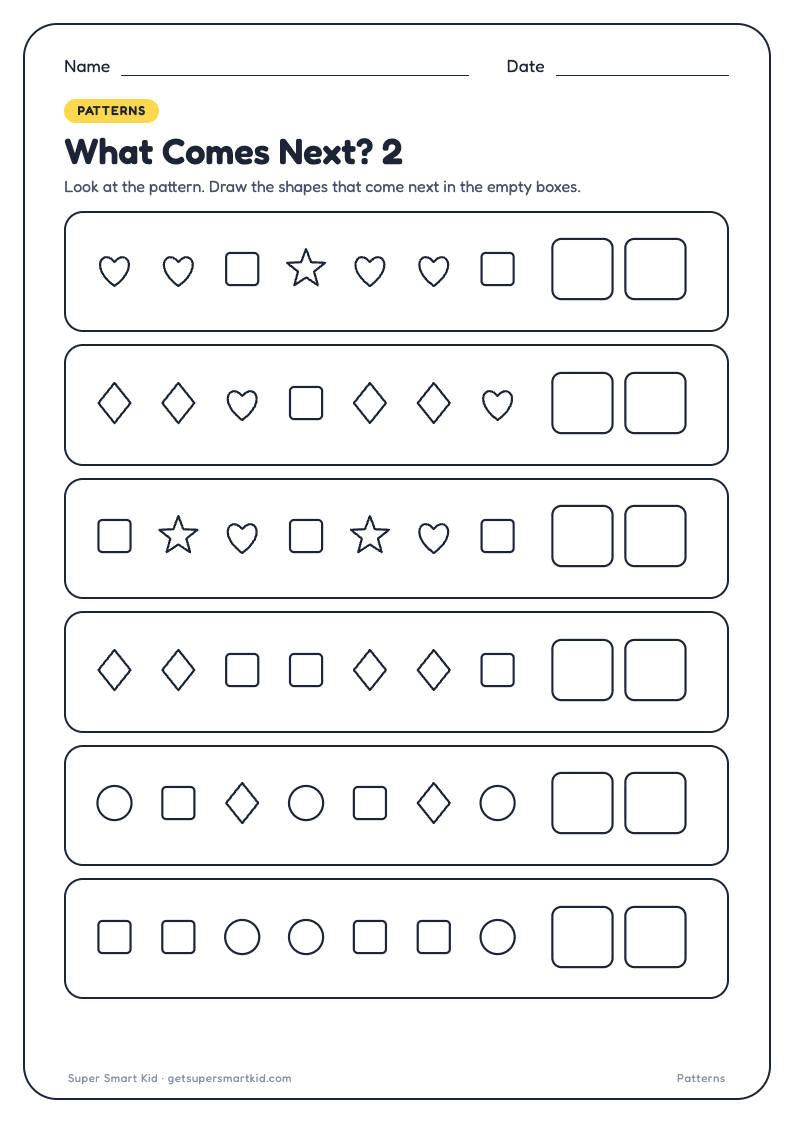
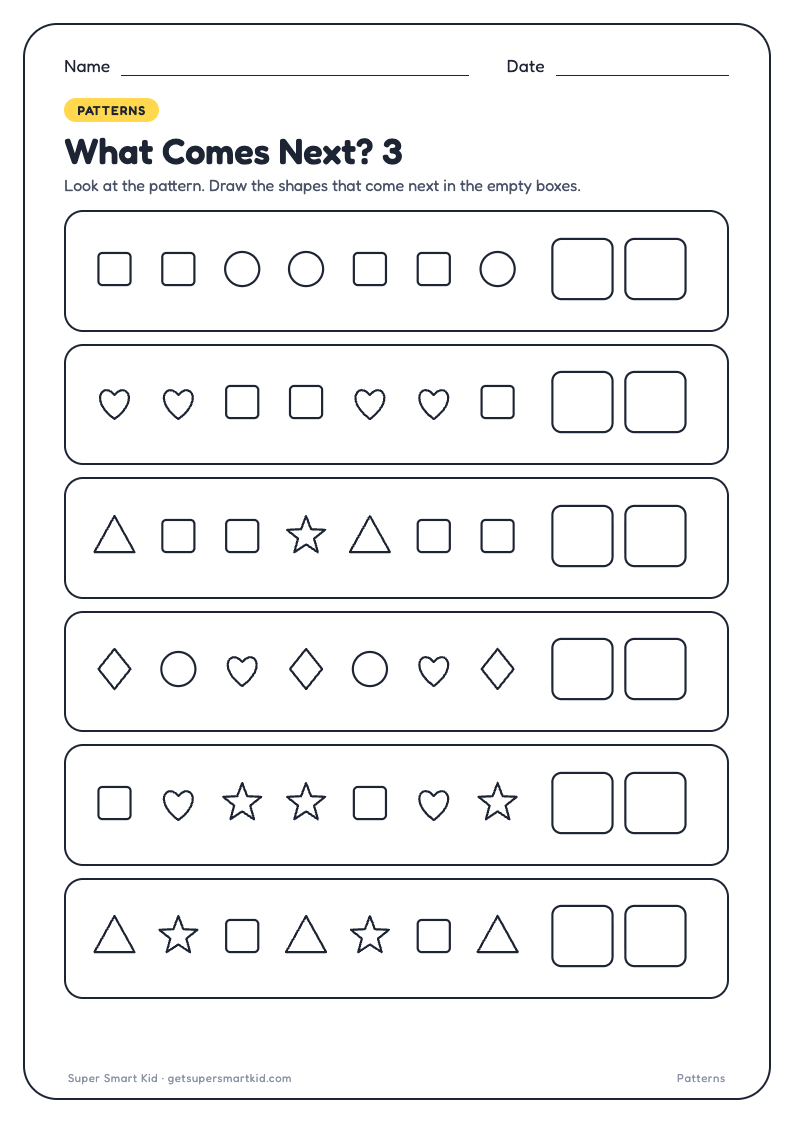
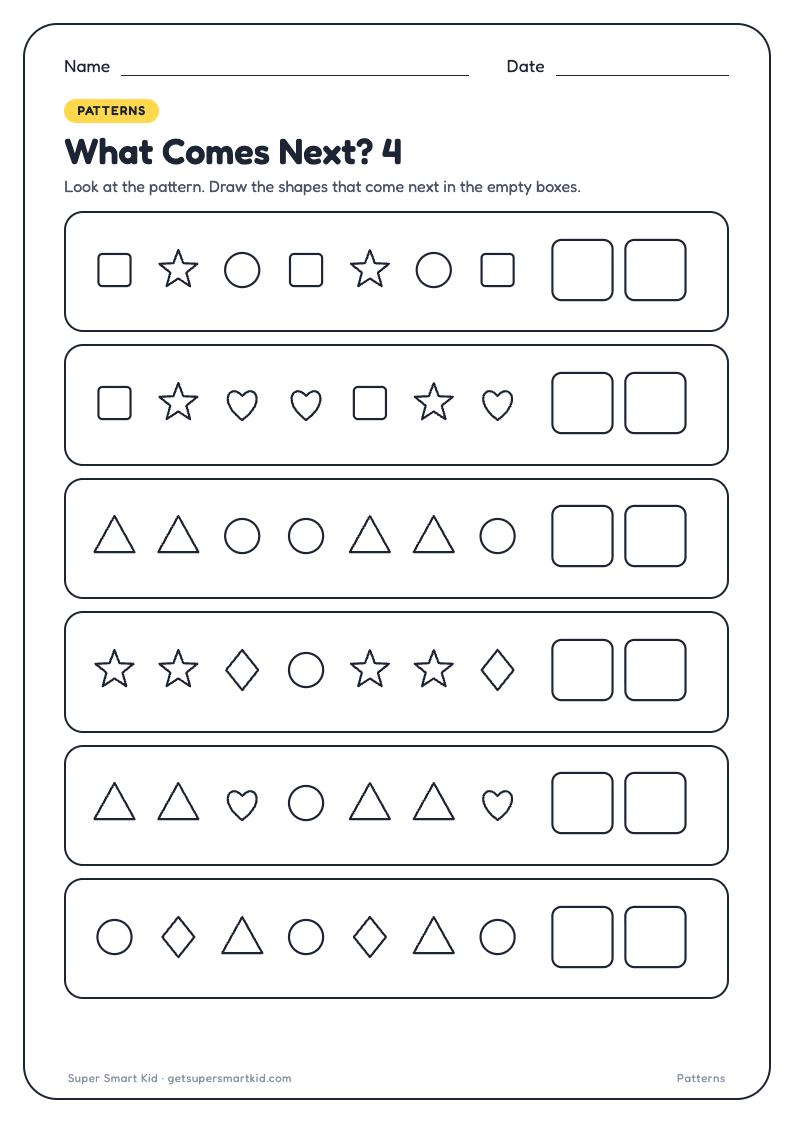
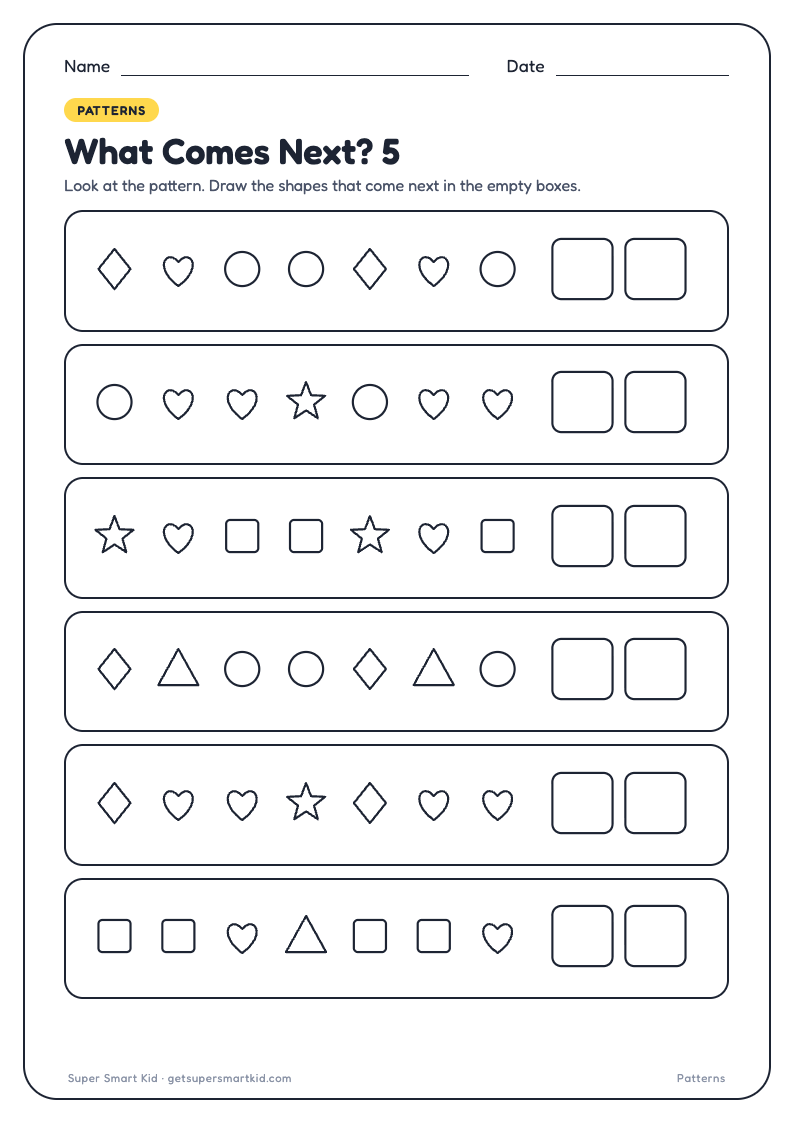
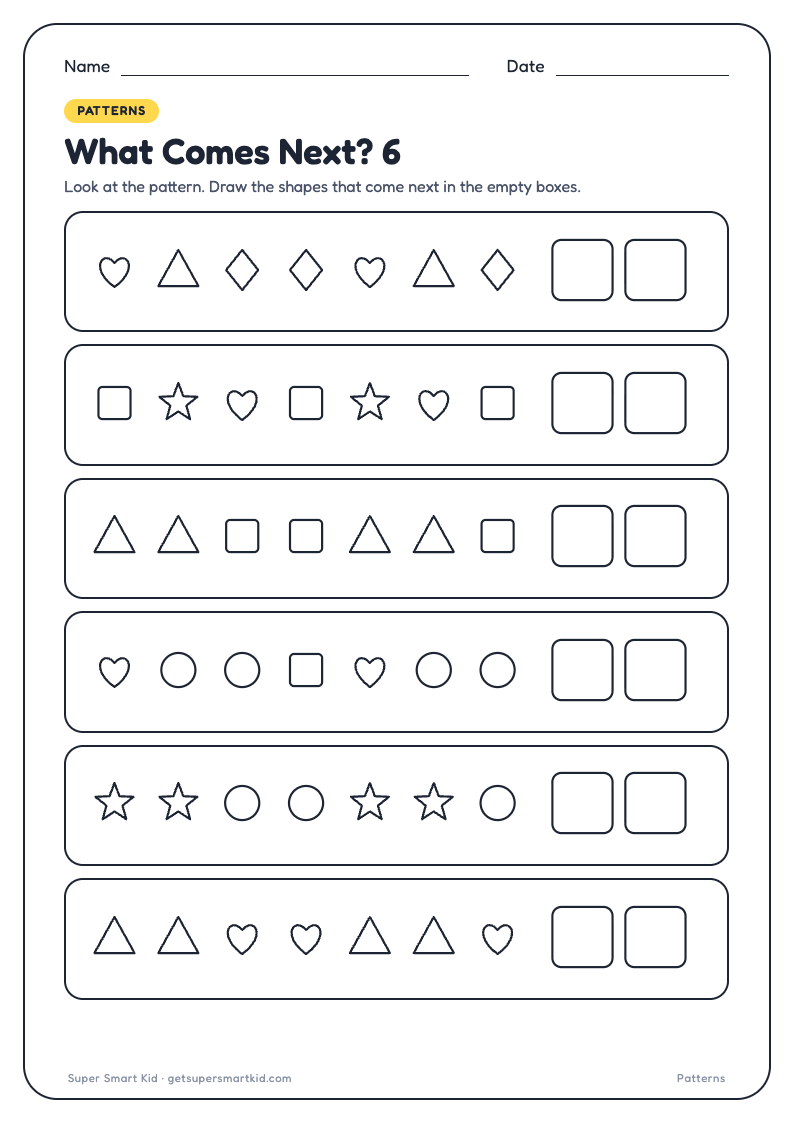
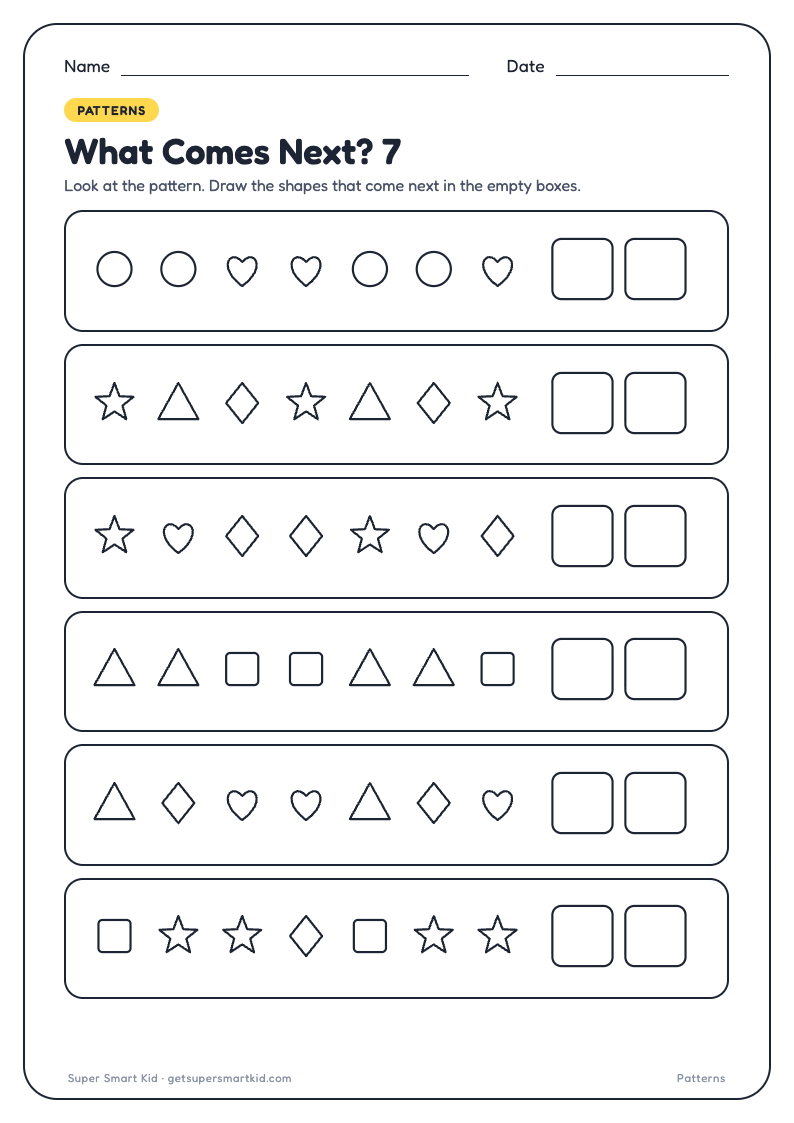
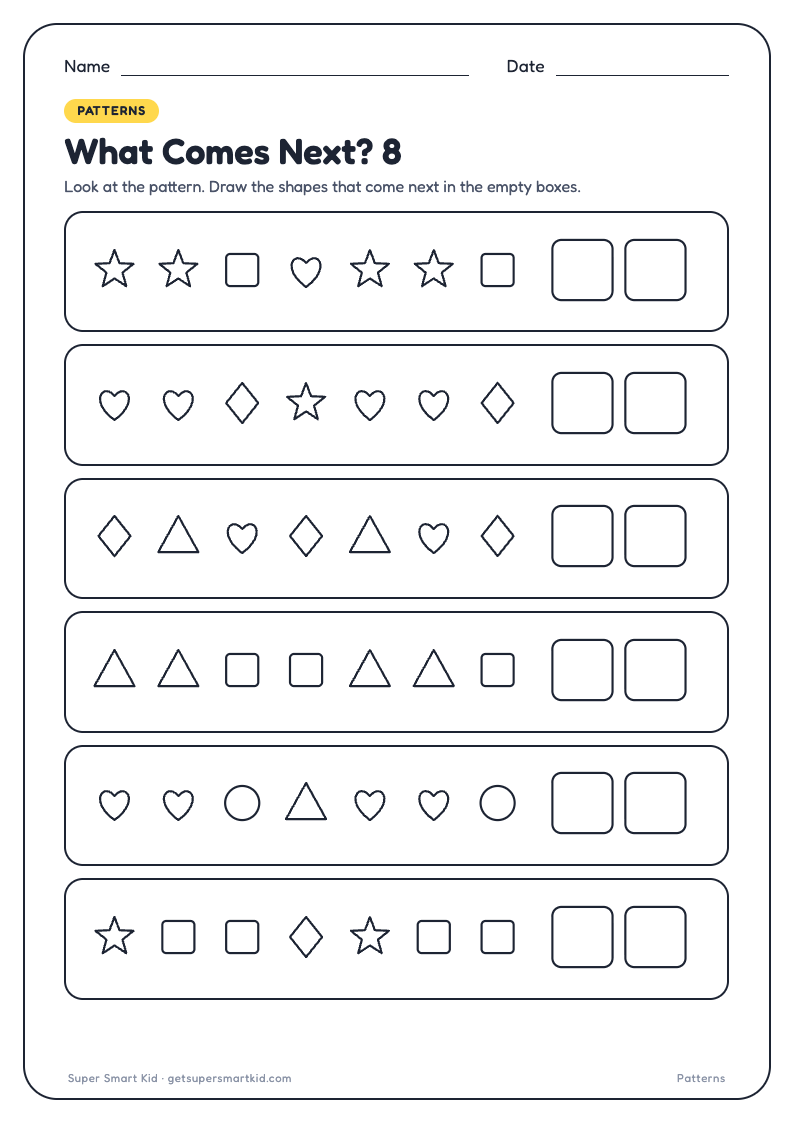
How to use these worksheets
- Ask your child to find the "core" first: the smallest group of shapes that keeps repeating. Circling it with a pencil helps.
- Then ask them to say the pattern out loud, core by core, before drawing anything.
- Draw the next two shapes, then check by reading the whole row again from the start.
- If a row is too hard, cover everything except the first core and build it up again one piece at a time.
- Two or three rows a day is plenty for this level.
Common problems, and what helps
Guessing from the last shape
Remind your child that the answer comes from the core, not from the last shape in the row.
AABB and ABBC mixed up
Point out which shape comes twice. Doubled shapes are usually where children lose track.
Finding these easy
Ask them to invent a pattern with four shapes for you to finish. Making a pattern is harder than finishing one.
Want more than 8 pages?
Our full pack has 1,000+ patterns worksheets, plus tracing, colouring, early maths and more: 14,000+ Kids Worksheets for ages 2 to 7, sorted by age.
Get All 14,000+ Kids WorksheetsJust ₹199, instant downloadQuestions parents ask
What patterns do class 1 children learn?
Repeating patterns of shapes, colours and numbers, usually with three or more parts, and simple growing patterns like 2, 4, 6, 8.
How are these different from the LKG pattern worksheets?
The LKG set uses two shapes and short repeats. This set uses three shapes and longer repeats, so there is more to hold in mind.
Why do patterns matter in maths?
Finding the rule in a pattern is early algebra. It is the same thinking children later use for number sequences and times tables.